

Universities are obligated to train agents of social change to address global problems.

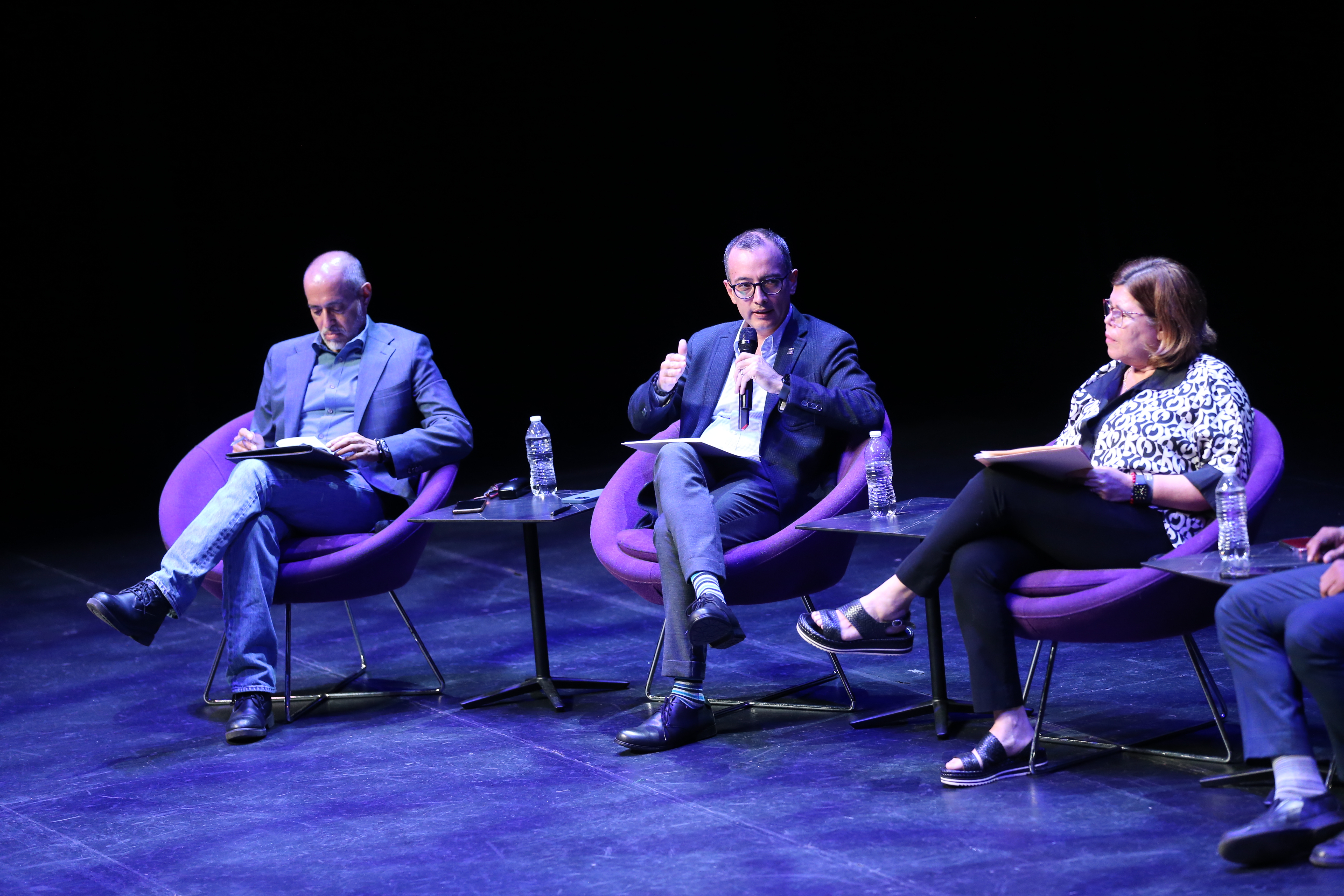

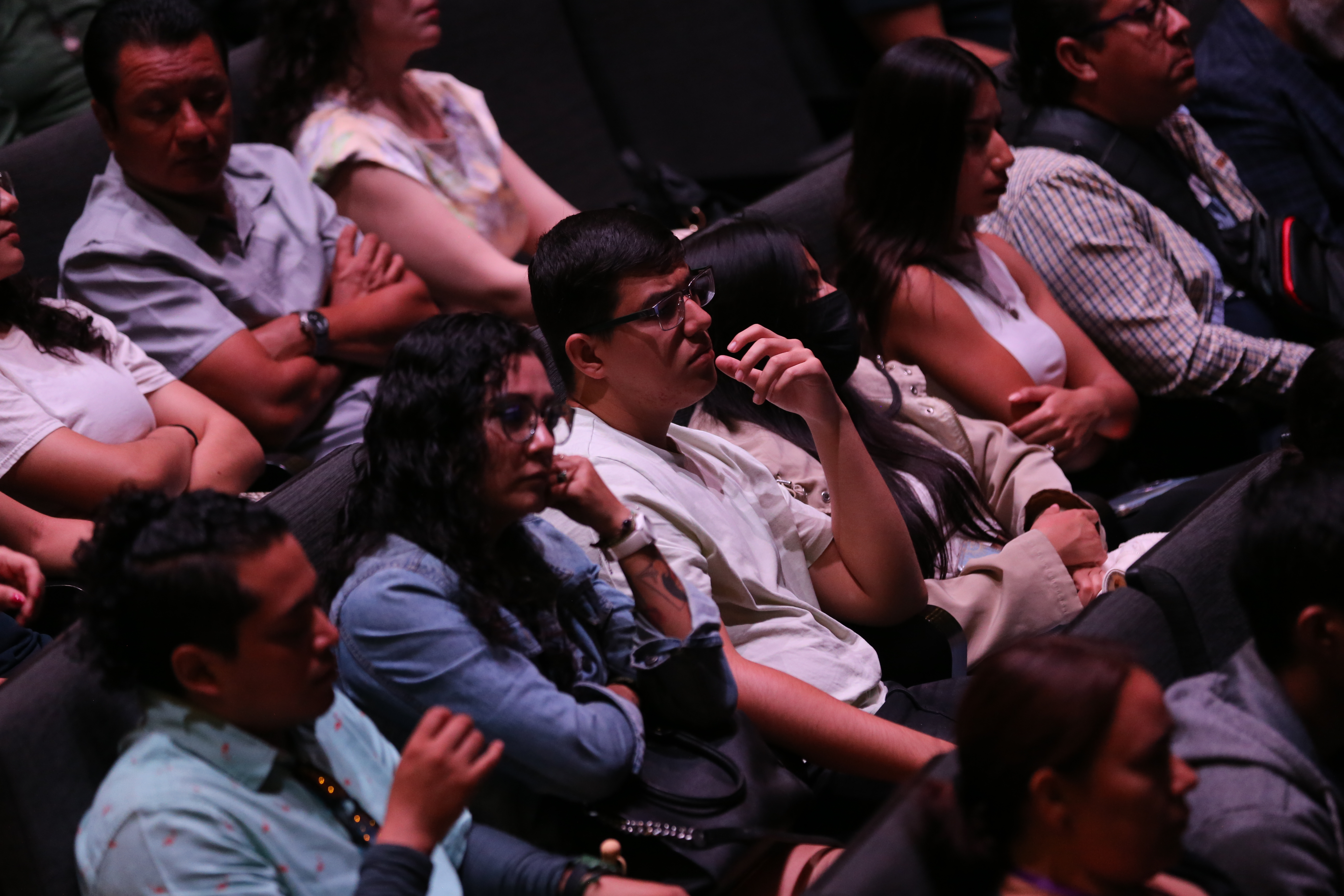
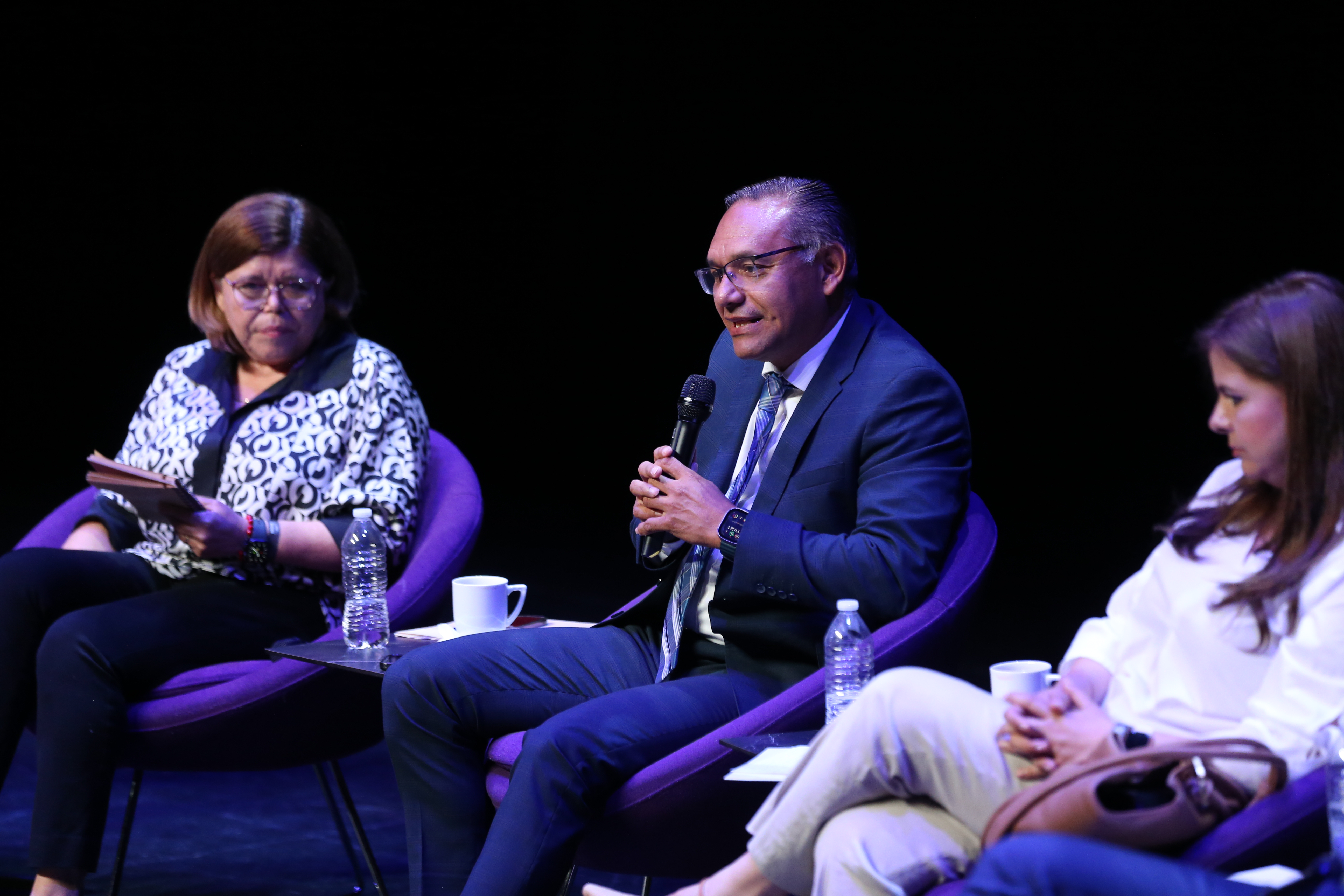
The third edition of Innova Forum, at the Santander Performing Arts Center, opened the way for reflection on the human influence in innovative educational processes and the use of Artificial Intelligence (AI) to promote new forms of learning, research and inter-institutional collaboration.
Rectors of the university centers of Exact Sciences and Engineering (CUCEI), of the North (CUNorte), of the Valleys (CUValles)) and of Los Altos (CUAltos), together with the Director of the Virtual University and Lifelong Learning (UDGPlus) and the Vice-Rector of the Universidad de GuadalajaraThey discussed the panel “Analysis of the problems of the 21st century”.
The discussion focused on how universities have modified curricula to achieve an innovative education that also helps to rethink self-criticism and generate solutions to global problems that are considered by all governments.
The Rector of CUAltos, Dr. Karla Alejandrina Planter Pérez, said that universities, especially public ones, must reflect on the emergence of problems that affect the world from the perspective of global interconnection, in which solutions must be created interdisciplinarily and always focused on nearby contexts.
“The key to raising awareness is to emancipate ourselves and build resistance against those who refuse change and the urgent need for diverse, comprehensive, and inclusive solutions. In universities, we must train agents of social change to address global problems, providing them with the tools to reflect on and implement solutions in an interconnected society,” he stated.
The Rector of CUCEIDr. Marco Antonio Pérez Cisneros spoke about the resilience that societies must develop, which helps to resolve problems harmoniously, without violence and under more humane scenarios.
“Globally, 9 percent of energy used is solely for internet connections, and this is expected to increase and could lead to a global blackout if it is misused or excessive; the question here is whether, as a society, especially young people, we can solve this problem without reaching a collapse,” he stressed.
"To chart a course, provide values, and re-educate all members of the university so that digital and ethical transformation can come to fruition," he added.
“The university has a social commitment to structure the judgment of its students, but at the same time it must connect, emancipate itself and be a space of convergence with public, governmental, business and global agents, which allow diversifying criteria and solving problems from different perspectives,” explained the Rector of CUValles, Dr. María Luisa García Bátiz.
For his part, the general director of UDGPlus, Dr. Carlos Iván Moreno Arellano spoke about the subject “Analysis of global problems of the 21st century” which is taught throughout the Red Universitaria Starting this semester, the program aims to generate reflection and a critical vision among students on topics such as poverty, global warming, education, and others.
“This course is designed by more than 60 professors, the content is impeccable, the platform is very well designed, the case studies are on par with those at Harvard, but the trap here is if we only transmit that content and don't make them think critically, work in teams, and discuss it; that is one of the challenges we have as a university,” he commented.
Regarding teaching methods and the limitations that arise from contextual and social conditions, the Rector of CUNorte, Dr. Uriel Nuño Gutiérrez, stated that the worldview of the regions must be understood in order to adapt education and tools, and not the other way around.
“The question here is to reflect on what kind of human beings we want to create, and how we are going to do it. We must consider the problems holistically and look at them critically so that they don't disappear,” he said.
The Executive Vice-Rector of the UdeGDr. Héctor Raúl Solís Gadea explained that to face educational change, universities and their members must be rebellious and resist in order to strengthen their foundations and begin to collaborate with human values.
Challenges and opportunities of Innova Forum
This year's Innova Forum focused on reimagining education and its surrounding values through the use of AI. Moreno Arellano explained that, unlike previous years, the priority was not the application of technology, but rather the human perspective and the preservation of ethics in the world.
“This year we have the participation of approximately four thousand people; surprisingly, the number of high school students increased, which has given us a guideline to analyze the challenges we will face in shaping the humans who will solve the world's problems, so we must reinforce social criticism and positioning,” he stressed.
“The biggest challenge is to continue the educational pursuit that allows us to keep doors open at all times so that graduates, once they know what their job will be, acquire the tools they lack; in addition, we must continue to talk about the human condition and its values in the face of AI, because just as technology was born in a classroom, a profile of ethical use must be born in the same,” Moreno Arellano concluded.
Attentively
"Piensa y Trabaja"
“30 Years of Autonomy of the Universidad de Guadalajara and its network organization”
Guadalajara, Jalisco, September 5, 2024
Text: Valeria Estefanía Jiménez Muñiz
Photo: Abraham Aréchiga
- 769 views