

Academics indicate that mass deportations of migrants to Mexico are not expected.

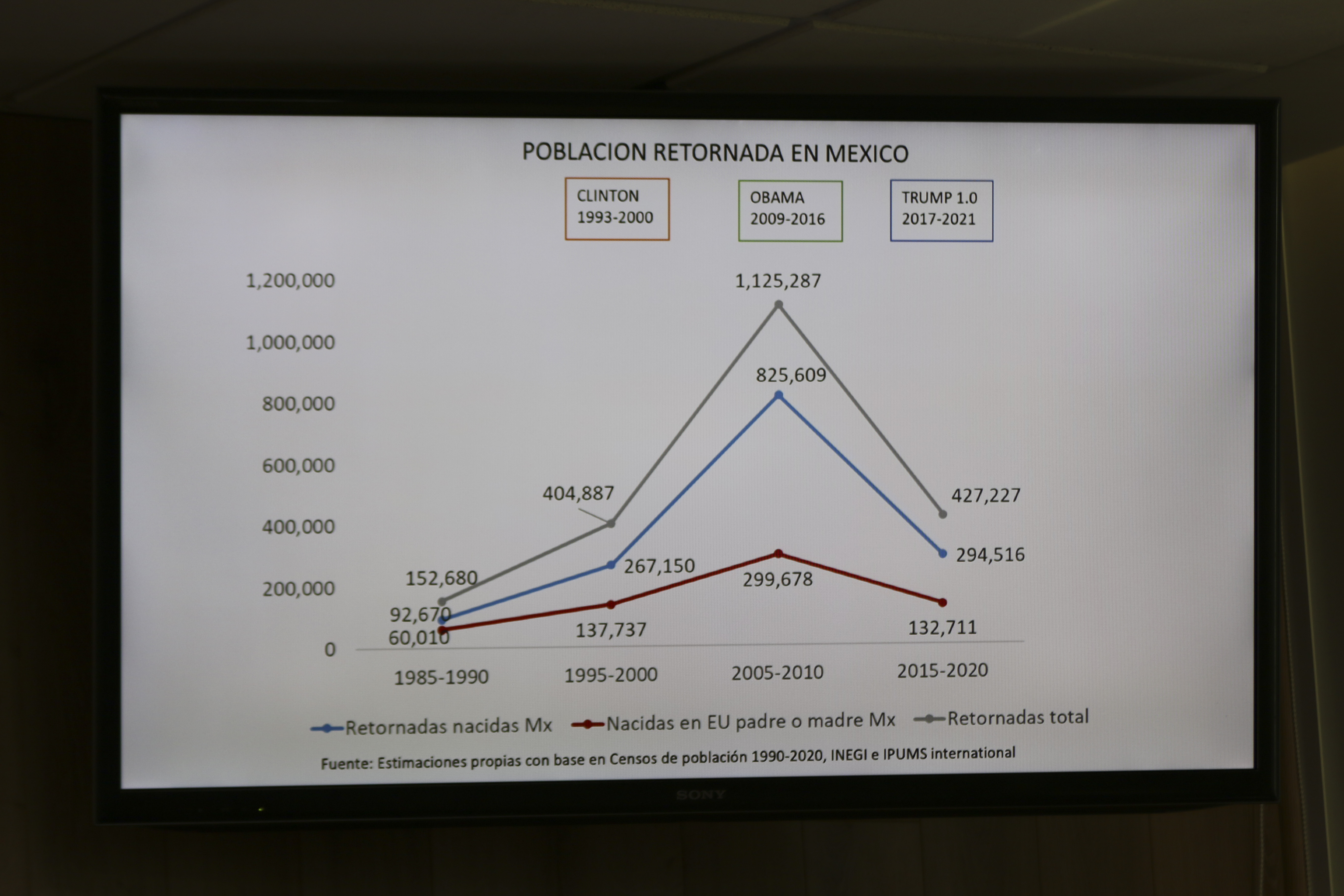

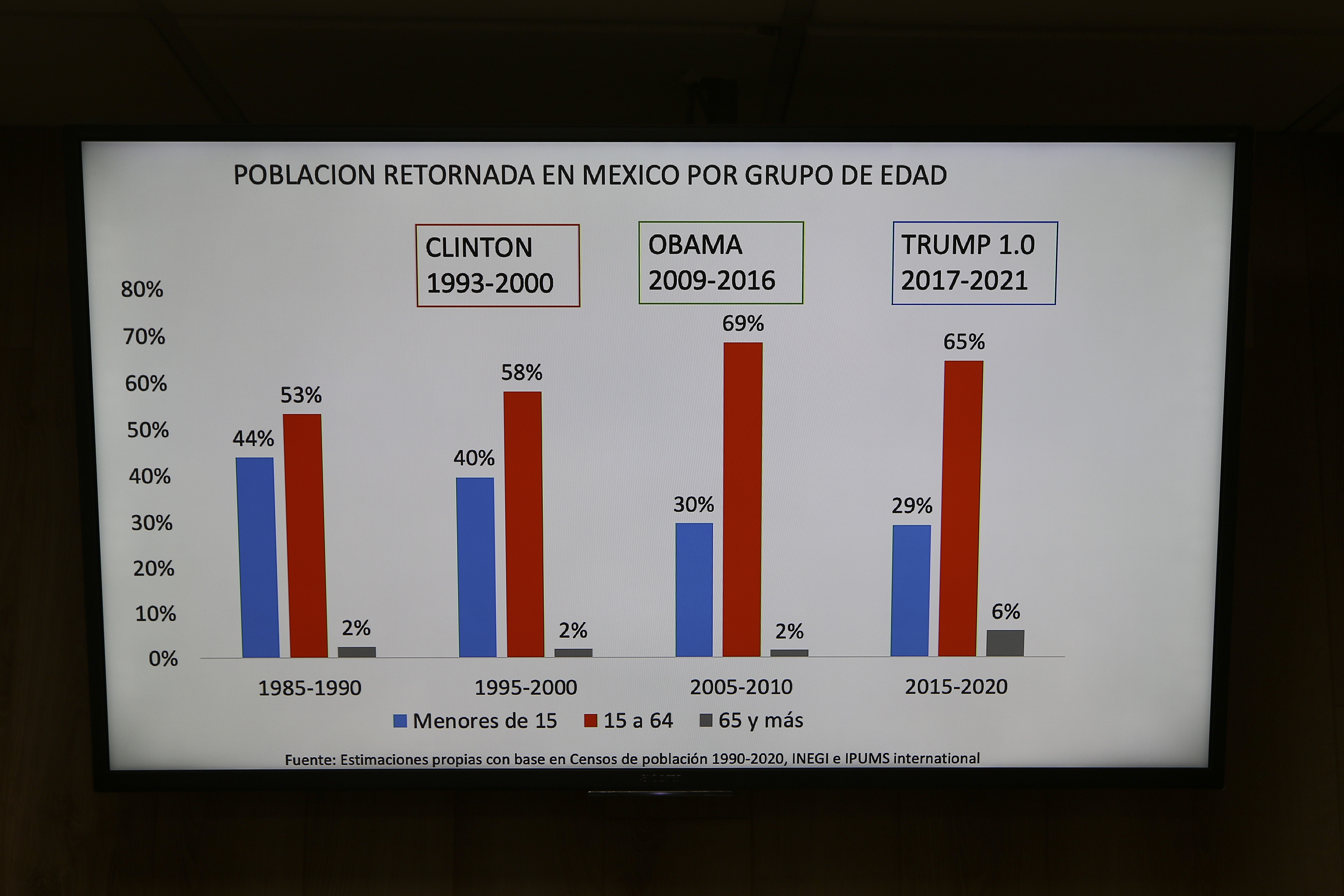
Mexico is the United States' main migration partner And migration, as well as trade, generate broad economic, social, and demographic benefits for both countriesFurthermore, the Mexican-origin population and Latinos constitute a powerful force driving development and progress in that country.
This was stated at a press conference by Dr. Alejandro I. Canales, a researcher at the Department of Regional Studies (INESER) of Centro Universitario de Ciencias Económico Administrativas (CUCEA) of the UdeG.
“Migrants are a demographic, economic, and political force that contributes to both American and Mexican society. In that sense, Attacking migrants and Latinos, erecting barriers, and criminalizing their situation constitutes an attack on the neighboring nation itself.“Since they are one of the pillars that support its development, progress, and economic, demographic, and political power worldwide. Mexicans and Latinos are not enemies of the United States; we are a vital force that drives that nation forward,” he said.
Mexico remains the main migration partner of the US and it is estimated that today there are 54 million migrants in that nation, which represents 16.2 percent of the total population.
"One in six people in the United States is an immigrant. And 12.7 million are Mexican; one in four migrants is Mexican, and they contribute 10 percent of the GDP. They actively participate in the economy, covering the entire food chain, from production, with agricultural day laborers, to the transformation of the agro-industry, to the processing of food for serving,” he added.
The Head of the Department of Health-Disease as an Individual and Collective Process, of Centro Universitario de Tlajomulco (CUTlajomulco), Dr. Patricia Noemí Vargas Becerra, said that despite the discourse focused on the tightening of immigration policies, and compared with statistics from previous years, mass deportations are not expected.
"We will not see waves of returns that would exceed the political capacity of our governments.History shows us that deportations have generally remained consistent; yes, there have been peaks, but Massive returns are not feasible in practice, because this would involve human and financial resources“A lot of money is needed to carry out a massive deportation policy. The volume of repatriations under the Trump administration was not the largest in history; therefore, it is important not to panic,” Vargas Becerra emphasized.
He stressed that regardless of the number of people deported, Governments must be prepared to welcome their citizens and provide opportunities developmental.
INESER researcher Dr. Edith Yolanda Gutiérrez Vázquez stated that in this situation it is important to see what happens to deported people, what the opportunities are and the real concerns.
"Migration, on some occasions, is like a safety valve."They leave due to labor situations in their countries of origin in search of better working conditions, while the profile of the returnee has changed considerably; it is increasingly a more educated population, a population that goes directly to the market," he said.
Historically, around three-quarters of the deported population report residing in their own homes; however, more people with disabilities have also returned to work, representing less than 2 percent, and they require some form of assistance. And the ifformerly called dreamers, who in 2024 numbered 468 Mexicans.
These population groups “are the most vulnerable segment and those for whom we need to be thinking about targeted policies, because in many cases they live in blended or mixed families. In most cases, they left Mexico at a very young age, or haven't seen their families for quite some time, and they are going to experience a return process,” she noted.
Attentively
"Piensa y Trabaja"
“1925-2025. A Century of Thinking and Working”
Guadalajara, Jalisco, February 5, 2025
Text: Press UdeG
Photography: Iván Lara González
- 366 views